Please bring two copies of the poem you will be work-shopping to class: one for you and one for your partner. Also, bring a copy of the workshop question to class and be prepared to write down answers to each question. Your responses to your peer's poem will be a graded component of this course, so make sure you provide thorough and rigorous answers to all prompts.
GUIDELINES AND QUESTIONS FOR POETRY WORKSHOPS
____________________________reviewer
____________________________ reviewed
1) The first step in the workshop process is for each one of your to read your poems out-loud. During this reading, don’t annotate; simply listen to your fellow student read their work. After one of you has read, the other will read their piece.
2) Read the poems out-loud again. For this reading, though, listen to where your fellow student pauses, stops, trips up over particular words and annotate your copy of the text. Likewise, if they speed up their pacing or speak through punctuation, line breaks, or stanza breaks, mark those instances as well.
3) Once each of your have perform two readings, create line breaks, stanza breaks, and punctuation that adheres to the manner in which they vocalized their poem. After you’ve done this, create three more versions of the poem using different line breaks and stanza breaks; try to vary your suggestions, using enjambments and end-stops different for each. Additionally, write down the overriding conceptual framework for each poem. To this extent, think about the exercise we undertook in class wherein we broke the pre-written prose block into different lines and stanzas. Make sure you, as a workshop partner, acknowledge why you made alterations in your four versions. Obviously, the first version will be based upon your peers breath and vocalization, so you will not have to write a conceptual justification for that version.
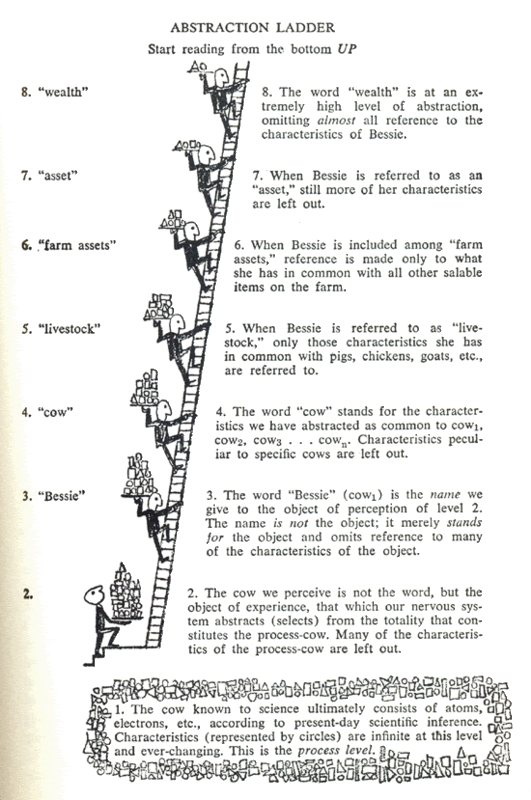
4) Locate the three highest-level abstractions in the poem. Use last class as an example; words such as “resolve” and “regret” are at the highest point of the abstraction ladder, so be on the lookout for these type of words. Once you identify three of these words, write down three different suggestions for how each word (which will make nine suggestions, total) and why they would be appropriate or more concrete. Oftentimes, this may mean that you will have to re-write a phrase or an entire line or two, as opposed to just swapping out a single word.
5) Locate three words within your fellow writer’s poem that are non-descript verbs and offer three suggestions (again, this will add up to nine different suggestions) as to how these particular words can be made richer and more linguistically dense. For example, in John Rybicki’s poem “Three Lanterns,” he doesn’t just write: “She puts her thumbs and fingers together”; instead, he writes: “She squares her thumbs and fingers together.” To this extent, do not just write down the first words that you can think of. Take some time and think about a plethora of words, especially ones that offer a lush, sonic resonance. Use dictionaries or thesauruses (online or in print) if you have them handy; if not, look trough Best American Poetry (2008) to see if any words in there could help you. Do the same thing with three nouns. If, for instance, your partner uses the word “trees,” suggest, instead, something that is more compelling, such as “a stand of honeylocusts.” Finally and in addition to the previous suggestions, offer three compelling phrases or word combinations, such as Chad Sweeney’s “oblique syntax of bones” or Lisa Russ Spaar’s “your vesper curfew gown.”
6) Finally, does your fellow work-shopper employ any metaphors or similes? If so, your first task is to determine whether or not those they use are a) clichéd (i.e. have you heard this before or does the comparison seem so obvious that it isn’t interesting), b) does the comparison make sense, and if not, does the poem attempt to explain the comparison, and c) does the poem mix metaphors (i.e. do different comparisons throughout the poem lack a central unity or vary so widely that different comparisons seem disjointed). Regardless of your answers, suggest an alternative for each metaphor. If the poet does not use metaphors or similes within their poem, re-write three instances within the piece where a metaphor or simile may be helpful. Again, as with previous re-writes, this most likely will mean that you have to re-compose whole, phrases, lines, or stanzas.
7) Discuss your suggestions, recommendations, and changes with your partner. Brainstorm with one another as to how these suggestions may work, or not work, within the piece.